
Desktop, Mindfulness, Opera Air
From Resolution to Routine: The Small-Step Method for Lasting Change
Share



Written by: Dr. Gunvor M. Dyrdal
As a psychologist I meet a lot of people, and recently I’ve seen many of them make New Year’s resolutions. Most of them don´t have one thing they want to change – they have many. They want to change not only their routines, but their body, career, relationships, and mindset. Sound familiar?
When we set out to change something in our life, we have to start small. Our mind is energy efficient, which means it thrives on routines. Anything we attempt for the first time is energy consuming, as it demands our full attention, focus, and effort. If we set out to change too many things at once, it will drain the system. And if you are like most of my clients, these New Year´s resolutions are put on top of everything else we already normally do.
So what can you do then? If you want to change something in your life – and want to increase your chances of success – the first step is to stop and reflect on what you want.
As a psychologist, I find that people seldom stop to contemplate life during the year, much less recalibrate and try to change course. But the new year offers an invitation to take stock – to look back on the challenges and opportunities, the highs and lows of the past year. What did you learn? What skills did you sharpen? Where did your time and attention go? With whom did you surround yourself?
And looking ahead: What do you want for the new year? What changes are needed? Who do YOU want to be this year?
Again, changing too many things at once will set you up for failure. It may work for a week or two, but then the motivation, energy, and effort needed to sustain the change may dissipate. The brain tends to return to running on auto-pilot, using the old and familiar scripts and routines.
So if you want to make realistic and manageable changes, don´t try to change more than one or two small things. Rather choose one that is important to you, and that will bring you closer to who you want to be. Maybe that one thing is taking better care of yourself through meditation or exercise? Making plans with friends more often? Finding a new job, or building a healthier relationship with someone in your life?
Many people I work with know they want to change, but don’t know how to do it. So here is a clear and easy step by step formula you can use!
After deciding what your goal is, find out why it matters to you. Motivation alone won’t pull you through when you feel tired or uninspired, so you will need a clear goal, a reason, and a plan. Make your plan as concrete and actionable as possible. What will you do, when, for how long, and with whom? Decide – and stick with it!
GOAL: What do you want to change? Make it actionable – form a new habit.
Be clear and specific, not general and vague. For example, “I will meditate for 10 minutes every morning when I get out of bed,” rather than “I will start meditating.”
REASON: Why does this matter to you?
What will change, or who will you become with this new habit? Is it related to your core values?
PLAN: Decide when and where it will happen.
Habits stick because we make a commitment to act, not because we intend to.
Note: Make space in your life by letting something go.
Do not try to add a new habit to an already full schedule. You only have so many hours in a day – something might have to give.

Habits are easily formed, but consistency is the most important factor for the new habit to stick. It doesn’t have to be big! But whatever you do, you have to do it regularly.
If I’m to give you one piece of advice, it would be to make the new habit so small that it is impossible to fail. To the point it almost feels silly.
Let me give you an example: Let’s say you want to start meditating using Opera Air. When you sit down in front of your computer in the morning:
- Open the browser
- Find the meditation you want (or use the same every time for simplicity)
- Sit for 15 seconds (then increase the duration a little bit each day).
Do this every day. Start small, and remember that making a change is not about mastery – it’s about building habits that last. And if you miss a day, don’t let that stop you from returning the next day. Because we all drop the ball sometimes – that’s life. But showing up consistently is how a new habit is formed.
So here is my challenge to you, whether it’s your New Year’s resolution or a change you want to make at any old time:
- Pick one thing you want to change.
- Write down why it matters.
- Make a plan and decide exactly what you’ll do and when.
- Make it so small you can manage it even on your busiest day.
- Then repeat it – consistently.
Good luck! And remember: Habits aren’t what you do occasionally. They are the patterns you build over time.
Happy 2026.
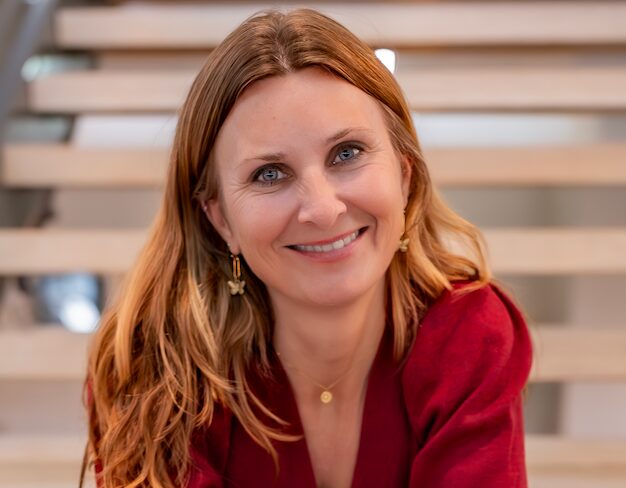
Gunvor Marie is an entrepreneur, a clinical psychologist with a Ph.D. in positive psychology, and a Senior People & Culture consultant. Her experience includes being an Associate Professor in mindfulness and positive psychology at NTNU (Norway), working with organizational development and leadership training, and operating a small clinical practice. She is also one of the owners of the Norwegian Center for Mindfulness, where she offers courses and professional trainings in mindfulness.

User comments

Feel good with Opera Air
Enter a clean, focused, ad-free web with guided meditations, break reminders, and ambient sounds with binaural beats.







You deserve a better browser
Opera's free VPN, Ad blocker, and Flow file sharing. Just a few of the must-have features built into Opera for faster, smoother and distraction-free browsing designed to improve your online experience.